
1. Introduction: Addressing the Dual Challenge of Male LUTS/BPH
Lower Urinary Tract Symptoms associated with Benign Prostatic Hyperplasia (LUTS/BPH) are broadly divided into two clinical components:
- Voiding Symptoms: Poor stream, hesitancy, straining, and terminal dribbling caused by bladder outlet obstruction.
- Storage (Irritative) Symptoms: Urgency, increased daytime frequency, urgency urinary incontinence (UUI), and nocturia.
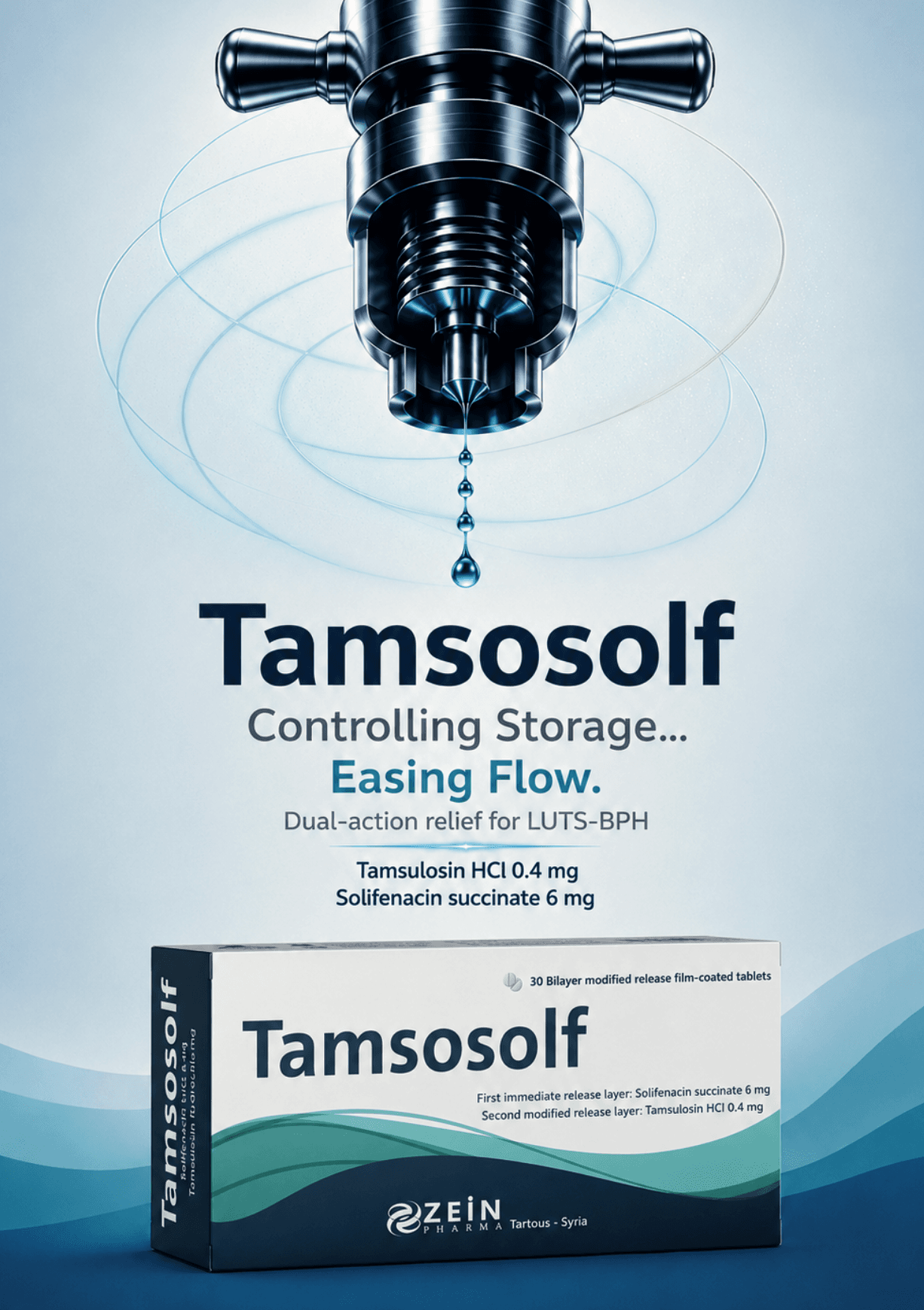
While α1-blocker monotherapy improves urine flow, many patients continue to suffer from persistent, bothersome storage symptoms. Tamsosolf, manufactured by Zein Pharma, offers a targeted dual-action combination formulated in an advanced bilayer modified-release tablet:
- First Immediate-Release Layer: Solifenacin succinate (6 mg) to control bladder overactivity and urgency.
- Second Modified-Release Layer: Tamsulosin HCl (0.4 mg) to relax prostatic smooth muscle and ease flow.
2. Global Urological Guidelines Endorsement
International urological associations give strong backing to combination therapy for patients with mixed voiding and storage symptoms:
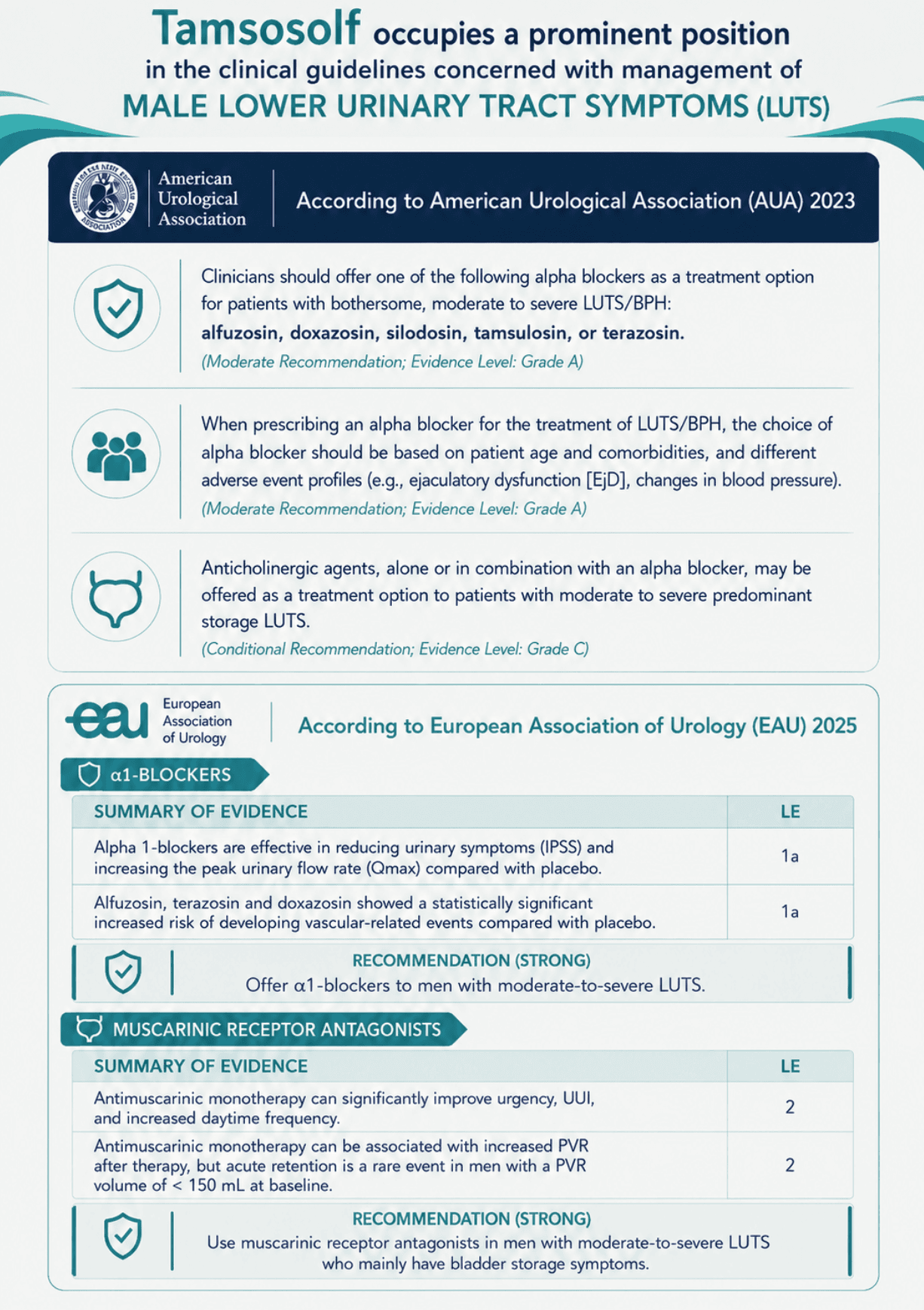
European Association of Urology (EAU 2025 Guidelines)
- α1-Blockers (Strong Recommendation, Level 1a): Effective in significantly reducing urinary symptom scores (IPSS) and increasing peak urinary flow rate (Qmax).
- Muscarinic Receptor Antagonists (Strong Recommendation, Level 2): Significantly improve urgency, urgency incontinence, and daytime frequency. In men with a baseline post-void residual (PVR) volume <150 mL, acute urinary retention remains a rare event.
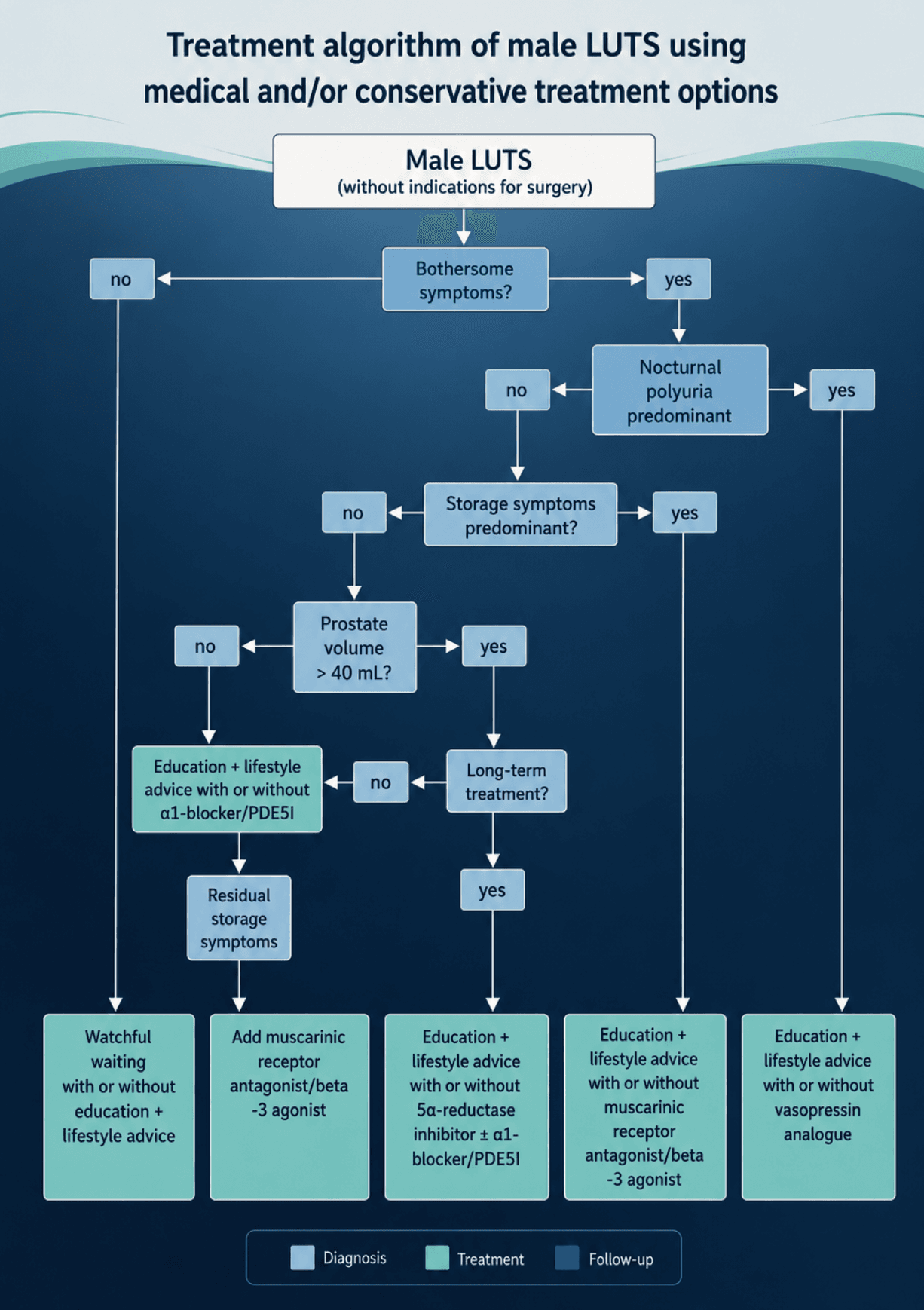
- Algorithm: Recommends adding a muscarinic receptor antagonist when residual storage symptoms persist after initial monotherapy.
American Urological Association (AUA 2023 Guidelines)
- Recommends α1-blockers (including Tamsulosin) as standard first-line options for bothersome, moderate-to-severe LUTS/BPH (Grade A Evidence).
- Recommends anticholinergic agents alone or combined with an α1-blockers for patients presenting with moderate-to-severe predominant storage symptoms.
3. Clinical Study Highlights: Combination Therapy vs. Monotherapy
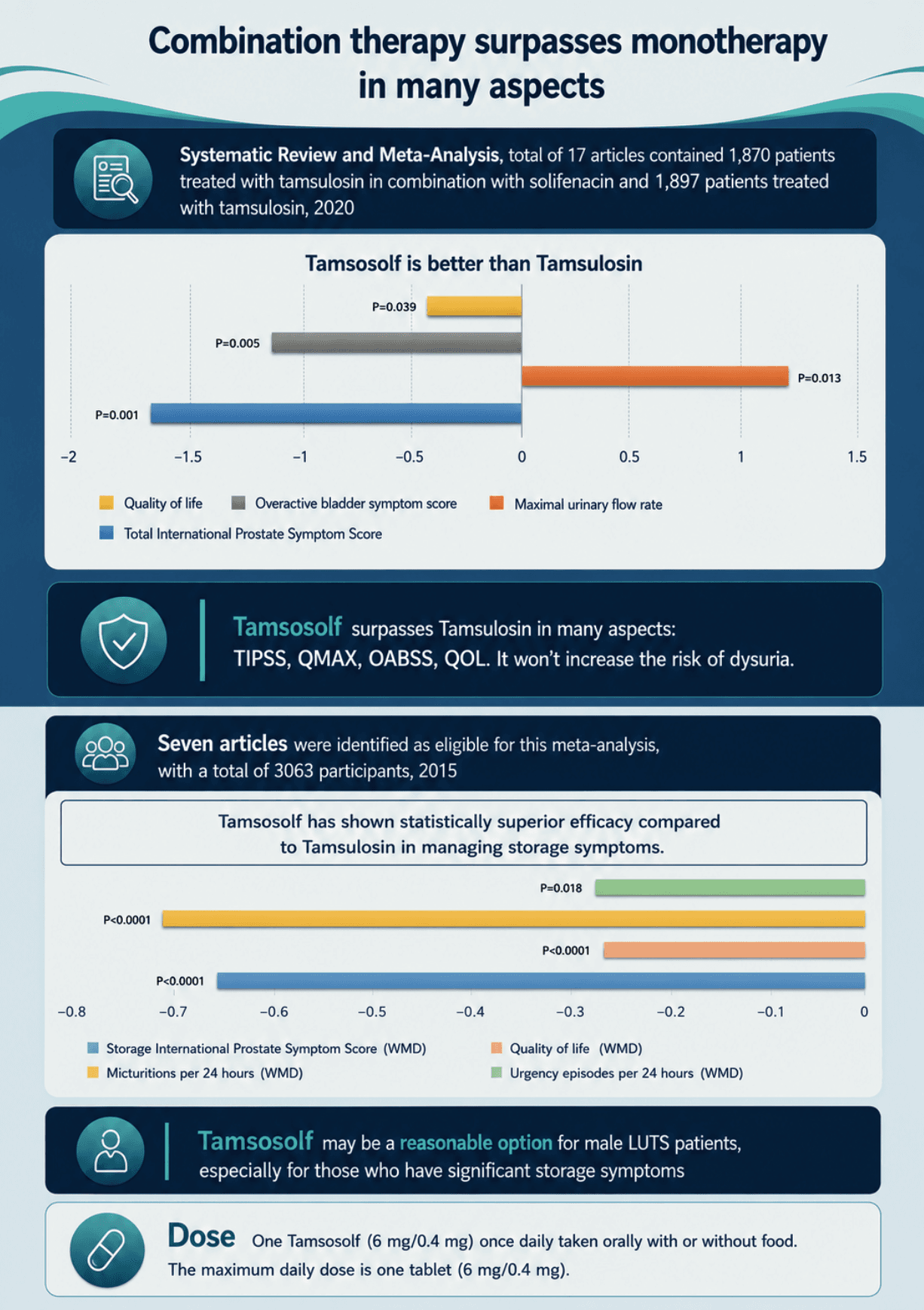
Superiority Over Tamsulosin Monotherapy (Meta-Analysis, 17 Studies, N = 3,767)
In a comprehensive systematic review and meta-analysis comparing Tamsulosin + Solifenacin against Tamsulosin monotherapy:
- Total IPSS Improvement: Statistically superior symptom reduction (p < 0.0001).
- Peak Urinary Flow (Q max): Greater enhancement in maximum urinary flow rate (p = 0.013).
- Overactive Bladder Symptom Score (OABSS): Significant reduction in bladder overactivity symptoms (p = 0.001).
- Quality of Life (QoL): Marked improvement in overall patient satisfaction and quality of life scores (p = 0.005) without increasing the clinical risk of dysuria.
Significant Control of Storage Symptoms (Meta-Analysis, N = 3,063)
In a dedicated meta-analysis evaluating storage parameters:
- Storage IPSS Score: Statistically superior symptom control compared to monotherapy (p < 0.0001).
- Micturition Frequency: Significant reduction in 24-hour micturitions (p < 0.0001).
- Urgency Episodes: Substantial decrease in daily sudden urgency episodes (p = 0.018).
4. Product Specifications Summary
| Feature | Specification |
| Brand Name | Tamsosolf |
| Active Ingredients | Solifenacin Succinate ($6\text{ mg}$) + Tamsulosin $\text{HCl}$ ($0.4\text{ mg}$) |
| Dosage Form | Bilayer modified-release film-coated tablets |
| Pack Size | 30 Bilayer Tablets |
| Drug Class | Antimuscarinic / Alpha-1 Adrenoceptor Antagonist Combination |
| Manufacturer | Zein Pharma (Tartous – Syria) |
5. Dosage & Administration Guidelines
- Standard Dosage: One Tamsosolf tablet ($6\text{ mg} / 0.4\text{ mg}$) once daily.
- Method of Administration: Taken orally once daily, with or without food. Tablets should be swallowed whole with water and not crushed or chewed.
- Maximum Daily Dose: One tablet ($6\text{ mg} / 0.4\text{ mg}$) per day.
Disclaimer: This scientific summary is intended for healthcare professionals and educational reference. Clinical therapy choices must be determined by a qualified urologist or physician based on individual patient assessment.